Showing posts with label Britain. Show all posts

Friday, August 20, 2010

BATSUB Dicontinues Emergency Services in San Pedro and Caye Caulker

We just read an article that was posted by Love FM on August 18, 2010.
We think is very important to share this information with the general public of San Pedro and Caye Caulker residents so that they may adjust their medical emergency plans if the need ever arises.

Share/Bookmark

 According to the Article written:

"Residents of San Pedro, Ambergris Caye have expressed concerns following reports that they will have to find an alternative method to get patients off the island during an emergency.
Jorge Aldana reporting...
"When you live on an island with limited medical facilities, it is imperative for its residents to know what to do in times of a medical emergency. For the island residents who have faced a night medical emergency in the past, they were normally transported via the British Army Training Support Unit of Belize (BATSUB). But Love News learnt on Tuesday that BATSUB had cancelled civil emergency evacuations for the entire country including the islands of San Pedro and Caye Caulker. BATSUB Press Officer Major Sean Ryan confirmed that indeed emergency air evacuation has been cancelled. Major Ryan explained that several conditions contributed to BATSUB’s pulling off their emergency air evacuation. Ryan stated that with the unavailability of pilots and having to overhaul their choppers, they had no other option but to cancel the emergency evacuation. He could not state for how long such services would be cancelled, but even after the choppers are overhauled, BATSUB still will have a shortage of available pilots and will be unable to offer the service on a 24 hour basis. So what does this mean for the over 12 thousand plus residents on Ambergris Caye? Doctor Javier Zuniga of the San Pedro Poly Clinic stated that its spells “serious problems.” According to Dr. Zuniga, history has shown that most of the medical emergencies that require further medical attention on the island happen at night. Zuniga also explained that in the past, patients that would require transportation would be evacuated via BATSUB and arrangement would have been done through the Poly Clinic. Zuniga explained to Love News that with the cancellation of BATSUB’s emergency air evacuation, the Poly Clinic will only make arrangements for transportation for daytime medical emergency evacuation via the Belize Emergency Response Team (BERT). So what will happen to a night patient should they requiring further medical attention off the island? Zuniga explained that, unfortunately transportation arrangement in such cases will fall squarely on the family of the patients. He said that while it is not the most practical and realistic approach, it’s the only thing the management of the Poly Clinic can do until a proper arrangement can be made. Zuniga cautioned however that the situation “needs to be dealt with extreme urgency,” especial considering that the island is the prime tourism destination in Belize. He stated that he will be meeting with the NEMO representative on the island to get all possible emergency numbers. He is also calling on both the Mayor of San Pedro Elsa Paz and the Area Representative as the elected representative to treat the matter with urgency and come up with a plan of action for the island before such an emergency situation arise. For his part, Area Representative and Minister of Tourism, Civil Aviation and Culture Manuel “Junior” Heredia told Love News late on Tuesday evening that he was unaware of the decision taken by BATSUB. He stated however that since the matter is considered of extreme importance, he will be following up with the relative authorities to come up with a plan. Heredia also stated that he will be taking the issue to Cabinet in the next meeting scheduled for Tuesday August 24th and promised to informed the public about a more practical and realistic plan. Until a quick and practical alternative is worked out, Dr. Zuniga is advising residents to have a medical evacuation plan should the need arise. Astrum Helicopter, Tropic Air and Maya Island Air offers night emergency air evacuation off the island on a private charter bases and residents are asked to get their emergency contact number. Prices for night private charters are not standard and include charges by the Belize Airport Authority. It is also advised that resident find out from the various water taxies if they offer similar services and if they do, then get an emergency number.”
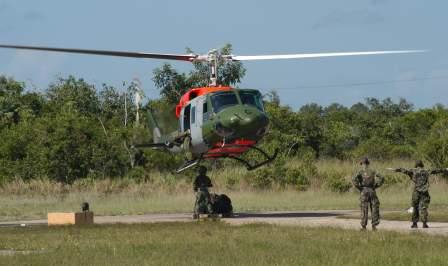

We should remember to plan for emergencies in advance, don't wait for something tragic to happen before you decide what you will do.

Start Making your Medical Emergency Plans Today!

Bookmark and Share

Subscribe
Share/Bookmark

Thursday, November 19, 2009

Garinagu/Garifuna Culture and History is celebrated every year on November 19th as Garifuna Settlement Day

The Garinagu (singular Garifuna) are an ethnic group of mixed ancestry and are descendants of Carib, Arawak and West African people. The British colonial administration used the term Black Carib and Garinagu to distinguish them from Yellow and Red Carib, the Amerindian population that did not intermarry with Africans. The Amerindians who had not intermarried with Africans are still living in the Lesser Antilles; Dominica, St. Vincent and The Grenadines, etc. The Garinagu people live primarily in Central America. They live along the Caribbean Coast in Belize, Guatemala, St. Vincent, Nicaragua and Honduras including the mainland, and on the island of Roatán. There are also diaspora communities of Garinagu in the United States, particularly in Los Angeles, Miami, New York and other major cities.

The History of the Garinagu
The Garinagu are recent arrivals to Belize, settling the southern coast of Belize in the early 19th century. The epic story of the Garinagu begins in the early 1600's on the Caribbean island of St. Vincent.
In 1635, two Spanish ships carrying Nigerian slaves floundered and sank off the coast of St. Vincent. The slaves that survived and swam ashore found shelter in the existing Carib Indian settlements. Over the next century and a half, the two peoples intermixed, intermarried and eventually fused into a single culture, the Black Caribs or Garinagu.

By 1773, the Black Carib was the dominant population of St. Vincent. European politics began to exert its influence throughout the Caribbean. A series of wars between the French and British on St. Vincent culminated in a final battle on June 10th, 1796, where the French and their Carib allies were forced to surrender and leave the island. Thus would start a journey by the exiled Caribs in search of a home.
The British deposited the Caribs on the island of Roatan, Honduras. Shortly after, the entire marooned population migrated to the mainland of Honduras and allied with the Spanish in the fortress town of Trujillo. Unfortunately, a brief civil war in 1832 found the Caribs on the wrong side and once again many, led by Alejo Beni, were forced to flee to neighboring British Honduras now known as Belize. That event is commemorated as Garifuna Settlement Day, a national holiday on November 19th.

According to tradition, the first Garifuna arrived in then, British Honduras (Belize) and then established villages along Belize's southern coast on November 19th, 1802. This day is now a national holiday in Belize, initiated by Thomas Vincent Ramos, celebrated with drums, dancing and pageantry. Today, there is one town in Toledo - Punta Gorda - that is considered a Garifuna town, and two Garifuna villages - Barranco (the oldest Garifuna settlement in Belize) and tiny Punta Negra.

The British Baymen who were already settled there were fearful of this independent and free group of Blacks and did their best to build up a distrust of them as "devil worshippers", "baby eaters" and "witch doctors" among their own slaves.

Garinagu Migration after Settlement
In recent history, Garinagu have thrown off their British appellation and encourage others to refer to them as Garifuna (Garinagu-plural). The Garifuna population is estimated to be around 600,000 both in Central America, Yurumein (St. Vincent and The Grenadines) and the United States of America. The latter, due to heavy migration from Central America, has become the second largest hub of Garifuna people outside Central America. New York has the largest population, heavily dominated by Hondurans, Guatemalans and Belizeans. Los Angeles ranks second with Belizean Garinagu being the most populous, followed by Hondurans and Guatemalans. There is no information regarding Garinagu from Nicaragua having migrated to either the East or the West Coast of the United States. Nicaraguan Garinagu are few. They are learning the Garifuna language and acquiring the different cultural aspects.

Garifuna Culture
Today, the Garinagu struggle to keep their culture alive. It is the devotion of the Garinagu to their roots which sets them apart from the other ethnic groups in Belize. While many Garinagu are professed Catholics, they have retained numerous traditions and rituals from their Afro-Caribbean heritage.

Central to the Garifuna community is the belief in and respect for the ancestors. The Garinagu retain their powerful spiritual connection with past generations of any family group through a ritual called "Dugu". A Spiritual leader called a "Buyei" or shaman presides over family members, who travel from all over the world to gather at the dugu meeting place called a "temple". No expense is spared as fresh seafood, pork, fowl and cassava bread are prepared for days of healing, dancing, drumming and communing with the spiritual world.

This spiritualism spawns a wealth of creativity among Garinagu in the form of music, dance and art. Punta Rock is a modern musical interpretation of a Garinagu cultural dance. The Punta dance accompanying the music - with its seductive movements and rhythmic beat - is Belize's most popular dance.

Another favorite dance - the "John Canoe" - is performed during the Christmas season. The dancer wears a mask which resembles an English face topped by a hand-made hat similar to the English naval hats of the 18th century. The dance displayed the skills of warrior-slaves while mocking their British overseers.

The traditional Garifuna colors are yellow, black, and white. Women often wear long dresses sewn from checkered material along with colored head pieces. Bright colors, distorted perspective and historical themes dominate the work of the many talented Garinagu painters. Hand made drums of cedar and mahogany, stretched with deer skin, continually pound the African beat in most Garifuna villages. Garifuna crafts include traditional cloth dolls, coconut leaf baskets and maracas made of calabash gourds.

Garifuna Foods
Traditional Garifuna foods are based on coconut milk, garlic, basil, and black pepper. Banana and plantain are grated, mashed, boiled or baked. Fish boiled in coconut milk, called serre, served with mashed plantain it’s called hudut and is a deliciously rich meal.

Cassava, is a woody shrub or herb which, like potatoes, has tuberous roots. But unlike potatoes, the juice which lies between the fibers of the manioc root is poisonous. The secret of extracting the root, involves a two-day process. First, the root is dug out before daybreak. The skin is peeled off, and the root is grated into a mash on stone studded boards.

This mash is placed into a wala, a long, narrow, loosely woven tube made of palm fronds. When stretched, the wala compresses the mash, squeezing out the poisonous fluid. The resulting dehydrated cassava mash is then sun dried and made into flour, which can be sifted and baked into flat round loaves called cassava bread. The course "trash" left from the sifting is baked black and simmered with ginger, sugar, and sweet potatoes into a favorite drink called Hiu.
Famous Garifuna People
Belize's most recognized Garifuna music artist, Andy Vivian Palacio (December 2, 1960 – January 19, 2008) was a Belizean Punta musician and government official. He was also a leading activist for the Garínagu and their culture.

Andy Palacio was born and raised in the coastal village of Barranco and worked briefly as a teacher before turning to music. He sang mainly in Garifuna, an Arawakan language with a large number of words borrowed from Carib, French, and Spanish, but also composed English-only songs. He was the first musical artist from Belize to have a music video on international television. He received the award for "Best New Artist" at the Caribbean Music Awards in 1991, and was post-humously awarded the BBC3 Awards for World Music award in the Americas Category, in 2008.


Bookmark and Share
Subscribe